
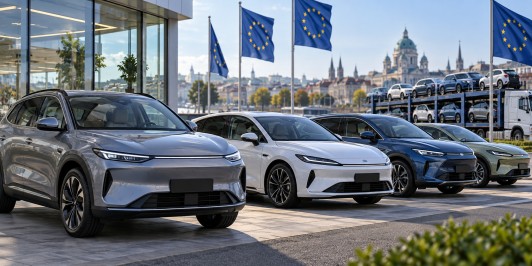
The rapidly increasing sales of Chinese-made hybrid cars in the European Union are raising alarms among local manufacturers, as these vehicles gain significant traction in the market. Driven by the EU’s introduction of anti-subsidy tariffs on Chinese electric vehicles in 2024, which do not apply to hybrids, Chinese manufacturers have capitalized on this opportunity, intensifying competition for European automakers.
Data reveals a staggering rise in sales of Chinese fully hybrid vehicles, from a mere 659 units in 2022 to 160,662 in the first seven months of 2026. Plug-in hybrid sales have also jumped significantly, with figures soaring from 56,706 in 2022 to 217,764 over the same period. This shift is a notable development as hybrid vehicles now constitute nearly 37% of the European car market, overshadowing the 21% held by fully electric vehicles.
Chinese brands such as BYD, Chery, and Leapmotor are rapidly expanding their presence, with Geely maintaining its position as the largest Chinese automotive group in the region. BYD has notably sold around 177,000 vehicles in the EU, while Geely recorded sales of approximately 205,000 units in the first eight months of 2026. Despite this growth, European manufacturers still hold the largest overall market share.
In response to this burgeoning competition, the European Commission has requested China to voluntarily limit its hybrid vehicle exports to the EU. Should China decline, the EU may contemplate instituting safeguard measures, potentially including quotas, to protect its domestic automotive industry. This development also occurs amid ongoing efforts by the EU to address its trade imbalance with China.
The surge in Chinese hybrid vehicle imports underscores the shifting dynamics within the European market and highlights the strategic adjustments needed by European manufacturers to sustain their competitive edge amid increasing foreign competition. As the EU navigates this landscape, the automotive industry’s balance between innovation, regulation, and international trade policies remains critical.