
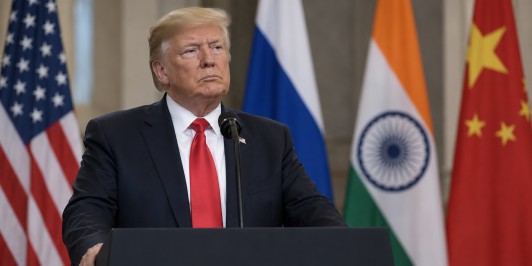
Major international energy buyers, including India and China, could face significant economic repercussions due to potential U.S. tariffs, as President Donald Trump signals a new strategy to pressure Russia over its ongoing conflict in Ukraine. The recently enacted Lindsey O. Graham Sanctioning Russia and Iran Act of 2026 empowers the U.S. president to impose tariffs of up to 100% on nations purchasing Russian oil and natural gas, a move aimed at undermining Russia’s financial capabilities.
Speaking at the United Nations General Assembly, President Trump emphasized his readiness to use these tariff powers if necessary to help bring an end to the violence in Ukraine. This development marks a strategic shift in U.S. policy, leveraging economic tools to address geopolitical tensions, and potentially impacting the global energy market by targeting Russia’s largest energy customers.
The legislation, which Trump signed into law last week, not only enhances tariff authority but also extends sanctions against Russian officials, financial entities, and sectors implicated in helping Moscow circumvent previous sanctions. This comprehensive approach is part of a broader effort by Washington to pressure Russia into negotiations and resolve the conflict that has gripped Ukraine.
Ukrainian President Volodymyr Zelenskyy has expressed support for the new sanctions, indicating a willingness to engage in further dialogue aimed at achieving peace. However, the law’s potential impact on India and China remains contingent on future decisions by the U.S. administration regarding the application of these tariffs.
While the tariffs are not automatically imposed, the possibility of increased economic pressure on major buyers of Russian energy underscores the United States’ commitment to using all available measures to influence the outcome of the Ukraine conflict. The move could have far-reaching implications for international trade dynamics and energy markets, depending on how the U.S. chooses to exercise its new powers.