
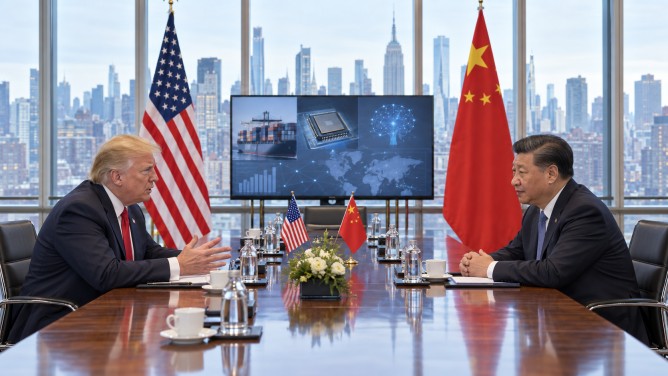
The ongoing negotiations between the United States and China could significantly impact global trade dynamics as both nations strive to solidify a tentative truce set to expire in November. These talks, held in New York, could pave the way for reduced trade barriers and provide clarity on artificial intelligence (AI) regulations, potentially influencing economic strategies worldwide.
Amid escalating concerns over tariffs and export restrictions, the discussions led by US Treasury Secretary Scott Bessent and Chinese Vice Premier He Lifeng are crucial in determining future trade relations. The focus is on addressing issues that affect key sectors, including American energy and agriculture, which could see a shift in export opportunities depending on the agreements reached.
Artificial intelligence remains a contentious topic, with US officials and tech companies wary of China’s advancements using technologies initially developed in the United States. These concerns have led to heightened tensions, as China rebuffs accusations of unfair practices and counters with resistance to perceived restrictions on its AI industry. This dialogue seeks to navigate these complex issues and mitigate the risk of further technological decoupling.
As the world anticipates the forthcoming summit between US President Donald Trump and Chinese President Xi Jinping, expectations are high for discussions that extend beyond trade to encompass broader economic and strategic interests. These include technology competition and the management of AI developments, which are critical to maintaining a stable bilateral relationship.
The outcome of these negotiations holds significant implications not only for the US and China but also for the global economy, as both countries play pivotal roles in international trade and technological advancement. Observers are keenly watching how these talks will shape future policies and economic cooperation between the two superpowers.