
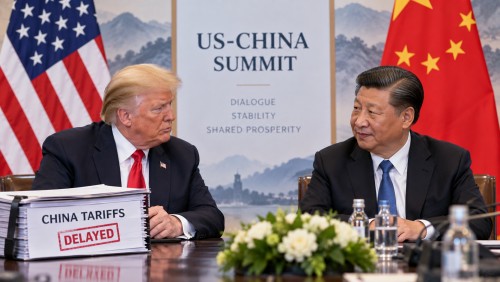
The practical consequences of the United States delaying new tariffs on China point to a strategic maneuvering in trade negotiations. By postponing the announcement of tariffs, the U.S. retains a powerful bargaining chip to leverage during the upcoming talks between President Donald Trump and Chinese President Xi Jinping. This decision could significantly impact the dynamics of trade discussions, potentially altering the course of economic relations between the two nations.
The delay in tariffs is likely tied to a trade report that had been in preparation, suggesting a 7.5% increase on Chinese goods. Such a tariff would have raised the overall U.S. tariff rate on imports from China to approximately 20%. This level aligns with the boundaries of the current trade truce, offering a frame within which both countries can negotiate without escalating tensions further.
As part of the lead-up to the Trump-Xi summit, U.S. and Chinese negotiators are expected to engage in preliminary discussions aimed at smoothing over trade agreements. President Xi’s anticipated visit to the United States marks his first trip since 2023, underscoring the significance of these negotiations. The outcome of these talks could set the tone for future economic engagements between the world’s two largest economies.
The Trump administration had initiated investigations under Section 301 of the Trade Act of 1974, scrutinizing the trade practices of over a dozen major partners, including China. These inquiries focused on issues such as excess industrial capacity, a topic that has been a point of contention. Any resultant tariffs from this investigation could compound existing duties, heightening the trade pressure on China and other countries involved.
China has made it clear that any increase in tariffs beyond the current truce levels could provoke a response. Chinese officials have argued against using industrial capacity concerns as a pretext for protectionist policies, indicating that the path forward must be carefully navigated to prevent further economic friction. With both nations seeking to solidify trade commitments ahead of the high-profile summit, tariffs remain a critical issue that could shape the trajectory of future U.S.-China relations.