
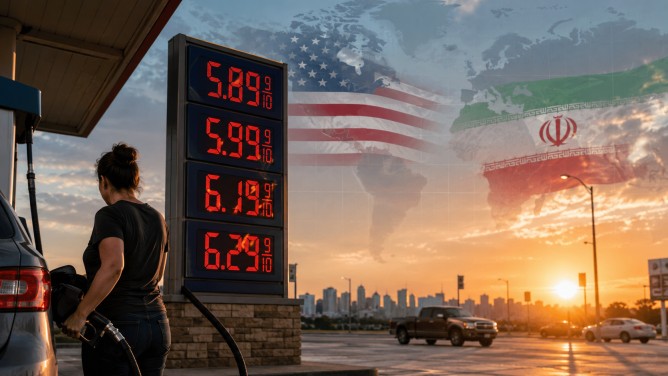
Gasoline prices in the United States have surged to their highest levels ever recorded for August, with the national average hitting $4.06 per gallon. This marks an increase of about five cents from the previous week and is approximately one dollar more than the same period last year. Some states, such as California and Hawaii, are experiencing even higher prices, with averages reaching around $5.50 per gallon. The escalation in prices is largely attributed to stalled diplomatic talks between the US and Iran, as well as ongoing tensions in the Strait of Hormuz, a critical passageway for global oil transport.
The rise in gasoline prices accompanies the ongoing US-Israel conflict with Iran, with significant disruptions reported in the Strait of Hormuz. This strategic maritime chokepoint is pivotal for the flow of oil worldwide. Brent crude oil prices had previously soared to $112 a barrel amidst these tensions, and although they have since decreased, they remain substantially higher compared to last year. Initially, there was a brief respite in prices when temporary agreements appeared to ease US-Iran tensions, but the failure to reach a consensus on Iran’s nuclear program has reignited concerns, leading to the latest price hike.
Recent diplomatic efforts between the US and Iran have been unsuccessful, failing to secure an agreement on Iran’s nuclear agenda within a designated 60-day timeframe. This deadlock has contributed to the upward trend in gasoline costs. Furthermore, President Trump has issued new threats against Oman, exacerbating fears of potential further instability in the region. Such geopolitical uncertainties continue to impact global energy markets, keeping oil prices elevated.
The increasing cost of fuel is adding to the financial burden on American households, which are already grappling with high living expenses. Reports indicate that over the past six months, Americans have spent tens of billions of dollars more on gasoline than they would have before the onset of the conflict. If energy prices remain at elevated levels for an extended period, the US economy could face renewed inflationary pressures, potentially affecting various sectors and consumer spending.