
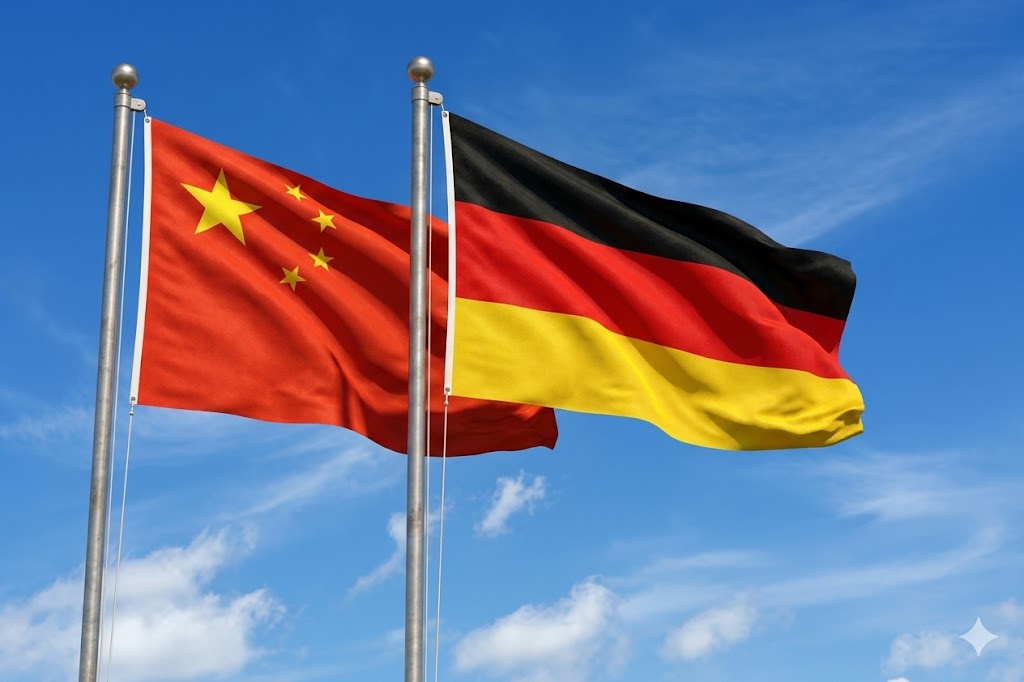
In a significant development highlighting the evolving dynamics of international business, China and Germany are enhancing their bilateral cooperation in business and technology. A newly released joint research report from the China-Germany (China-Europe) Hidden Champions Forum 2026, held in Beijing’s Shunyi district, emphasizes the increasing bidirectional flow of expertise and innovation between the two nations. This marks a shift from the previous trend where technological advancements primarily moved from Germany to China.
The forum, which attracted over 400 executives and business representatives from both Europe and China, underscored the mutual interest in expanding technological partnerships. The report revealed that a substantial number of European companies are keen on strengthening their foothold in China. Specifically, 38 percent of surveyed European firms are planning to boost their investment in research and development within China, and 40 percent aim to grant their Chinese branches more autonomy from their German headquarters.
This reciprocal exchange is further evidenced by the actions of prominent Chinese electric vehicle manufacturers such as Li Auto and NIO. These companies have set up research and design centers in Germany, demonstrating a commitment to deepening technological collaboration with their European counterparts. This move not only reflects the growing interdependence but also points to a future where innovation is jointly cultivated.
In conjunction with these developments, the forum also introduced a public service station designed to assist businesses in overcoming technical trade barriers. Additionally, a new partnership initiative was launched to encourage German and European companies to engage more actively in Beijing’s economic and technological cooperation zone located in Shunyi. These initiatives aim to foster a more integrated and cooperative business environment.
Tang Wenhong highlighted Beijing’s strategic plans to bolster cooperation between Chinese and German enterprises further, with an eye on attracting more innovative companies to the city. This strategy is part of Beijing’s broader objective to enhance its status as an international hub for science and technology, promising a vibrant future for Sino-German relations in the sector.