
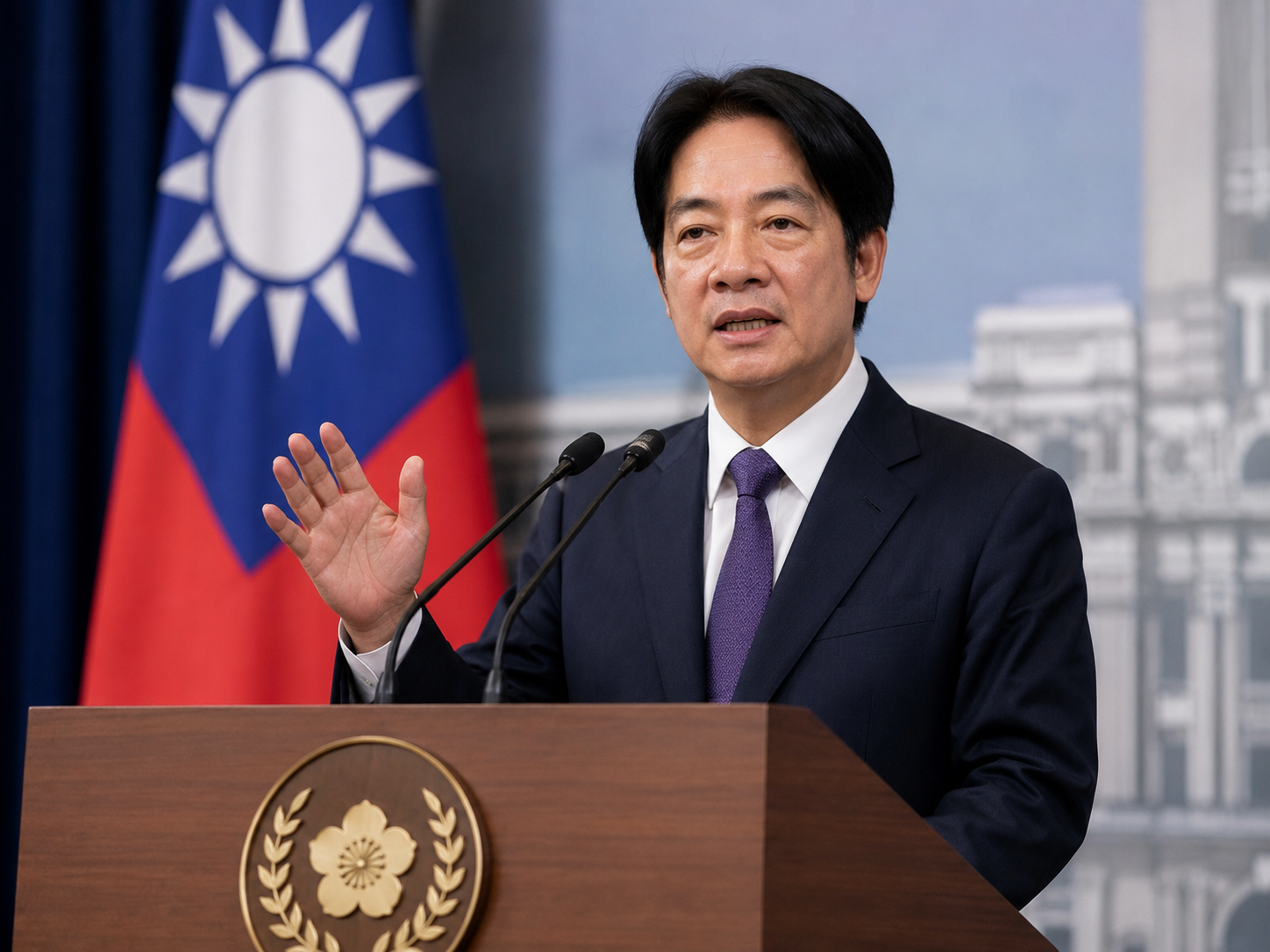
In a sharp rebuke, Taiwan’s President William Lai condemned China’s newly enacted Law on Promoting Ethnic Unity and Progress, asserting that Taiwan will not succumb to what he termed “red terror” or any expansion of Beijing’s reach over the island. During a Democratic Progressive Party Central Executive Committee meeting, Lai criticized the legislation as an extension of China’s authoritarian agenda with potential implications beyond its borders. He emphasized Taiwan’s commitment to bolstering defenses to protect its citizens and national interests from the mounting political pressure exerted by Beijing.
The contentious law, ratified by China’s National People’s Congress in March and activated this week, mandates Chinese citizens to endorse national unification. It also empowers authorities to hold individuals or organizations accountable for activities perceived as detrimental to ethnic unity or promoting ethnic division, though it lacks precise definitions of such offenses. Critics in Taiwan argue that the law aims to reinforce the notion of Taiwanese people being part of a larger Chinese national identity.
Lai expressed concerns that the legislation could justify cross-border enforcement actions and escalate pressure on entities outside mainland China. He pointed out that Beijing has already executed over 110 instances of cross-border pressure targeting Taiwan and warned that such tactics might broaden. Lai highlighted the risk that foreign governments, businesses, lawmakers, civil society organizations, and private individuals might encounter arbitrary actions due to the law’s expansive scope.
In response to these challenges, Taiwan’s government plans to enhance monitoring systems and refine early warning mechanisms, alongside reviewing additional policies to shield citizens from external interference. Lai announced initiatives to expand media literacy, improve civil servant training, and establish more robust prevention and response strategies against Beijing’s apparent cross-border repression campaign. Taiwan seeks to collaborate with democratic allies to elevate international awareness of human rights issues and defend its sovereignty.
Echoing the president’s concerns, Taiwan’s Ministry of Foreign Affairs described the legislation as another attempt by Beijing to extend its legal influence beyond its borders, conflicting with international standards and human rights principles. The ministry warned that the vague language of the law could lead to self-censorship and uncertainty among those fearing retribution. The legislation has faced criticism from various international entities, including the United States, Japan, the European Union, the United Nations, and Amnesty International, all of which have expressed apprehensions about its impact on human rights, legal clarity, and freedom of expression.