
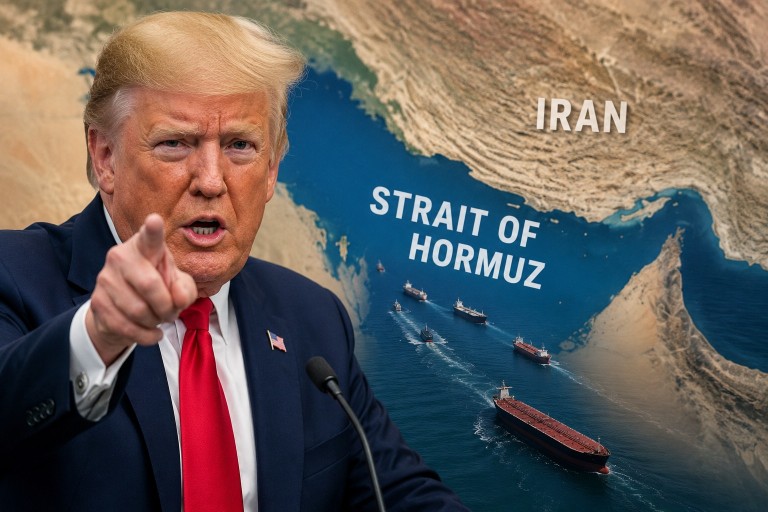
In a significant development, US President Donald Trump has asserted the possibility of designating the Strait of Hormuz as “a territory of the United States.” This comes amid ongoing tensions between Washington and Tehran, as efforts to reach a diplomatic resolution with Iran remain unsuccessful. Speaking in New York on Friday, Trump indicated that such a declaration could follow what he termed the defeat of Iran. He further claimed that the US already exercises control over this crucial maritime passage through a blockade.
The Strait of Hormuz stands as a vital artery in global trade, with approximately 20% of the world’s seaborne oil supply traversing this narrow stretch of water between Iran and Oman. The strait has largely been inaccessible since US and Israeli military interventions commenced against Iran. The exact implications of Trump’s remarks on US foreign policy remain uncertain, leaving open whether they signify an official policy shift or serve as a rhetorical stance.
Iran has swiftly dismissed Trump’s threat, with Deputy Foreign Minister Kazem Gharibabadi stating that Tehran remains unfazed by US pressure tactics. He emphasized that any decisions regarding the opening or closing of the strait fall under Iranian jurisdiction. Concurrently, Iranian Foreign Minister Abbas Araqchi clarified that Tehran has not opted to resume dialogue with Washington, noting that the ongoing exchanges through intermediaries like Qatar and Pakistan do not amount to formal negotiations.
The closure of the Strait of Hormuz has prompted Iran to set forth several preconditions for reopening the waterway, including compensation for damages incurred during the conflict, the removal of sanctions, and the unfreezing of Iranian assets. This impasse has contributed to a surge in fuel prices, impacting consumers globally. President Trump defended the resultant price hikes, arguing that the increase is a necessary measure to prevent Iran from acquiring nuclear capabilities.
The protracted standoff over the Strait of Hormuz has triggered widespread concern about potential disruptions to global energy supplies and the broader economic ramifications. As the situation unfolds, the international community remains watchful of the developments and their implications for regional stability and economic health.