
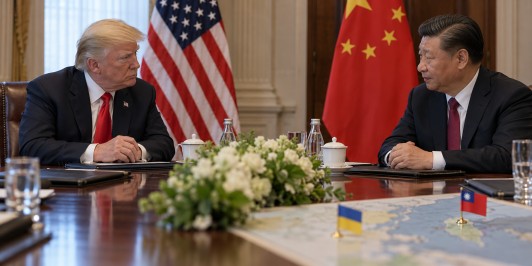
In a significant diplomatic meeting at the White House on September 24, U.S. President Donald Trump and Chinese President Xi Jinping discussed pressing global issues, including the conflict in Ukraine and tensions surrounding Taiwan. This summit marked their second in-person encounter this year, underscoring the importance of direct dialogue in addressing complex international challenges.
The ongoing war in Ukraine emerged as a focal point during the talks. Ukrainian President Volodymyr Zelenskyy has been vocal about seeking support from the United States, urging President Trump to leverage China’s influence over Russia to help facilitate a resolution to the conflict. While China maintains that it is not directly involved in the war, its extensive economic ties with Russia place Beijing in a critical position within the broader international effort to address the situation.
Taiwan also featured prominently in the discussions, with President Xi reiterating China’s firm stance against Taiwan’s independence. He emphasized the importance of national unity and territorial integrity, principles that Beijing considers non-negotiable. The issue of Taiwan remains a sensitive point in China-U.S. relations, frequently testing the diplomatic waters between the two nations.
Beyond these specific geopolitical concerns, the meeting covered a broad range of topics concerning China-U.S. relations, including trade, artificial intelligence, and major regional and global issues. Both leaders expressed a willingness to engage in discussions that encompass cooperation and competition, reflecting the multifaceted nature of their bilateral relationship.
The summit was a central component of President Xi’s state visit to Washington, which also included formal meetings and a state dinner at the White House. The dialogue between Trump and Xi highlights the ongoing complexities in international relations and the critical need for open communication between major world powers.