
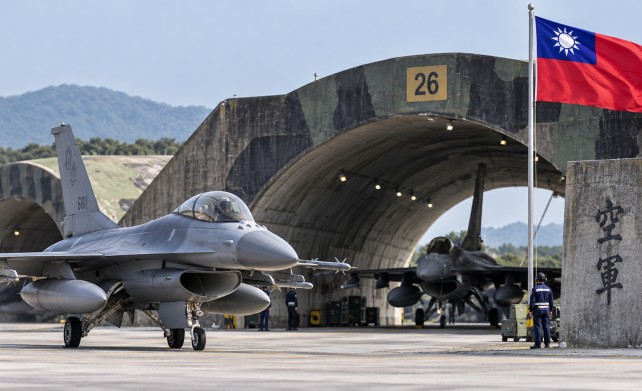
Taiwan’s air force has unveiled plans to construct 26 additional fortified aircraft shelters, anticipating the deployment of approximately 110 to 120 F-16Vs along the island’s eastern coastline. This expansion follows the acquisition of 66 new F-16V Block 70 fighter jets from the United States. The strategic enhancement will see these advanced aircraft stationed at Chihhang Air Base in Taitung County, complementing the existing F-16V Block 20s based in Hualien County. To safeguard the burgeoning fleet, the air force is set to allocate over NT$6.88 billion for the development of these shelters in Hualien and Taitung between 2027 and 2031.
As part of this initiative, 22 shelters will be erected in Hualien, with an additional four in Taitung. Alongside these, the air force plans to establish five general aircraft hangars and supporting infrastructure at Hualien to accommodate transport aircraft. The project is scheduled to kick off initial management, surveying, and design work in 2027, progressing to detailed design and contracting phases in 2028 and 2029. Construction is expected to commence in 2030, aiming for completion by 2031.
The introduction of these shelters is designed to implement a “one aircraft, one shelter” strategy, enhancing the resilience of Taiwan’s fighter fleet amid potential military crises. By dispersing aircraft to fortified facilities in Hualien and Taitung, the air force aims to preserve combat capabilities and sustain interception, suppression, and homeland defense operations. These structures are anticipated to offer heightened protection against explosive threats, ensuring a greater number of fighter jets remain operational in the event of a sudden assault.
In parallel, President William Lai has urged military leaders to adapt to the swift evolution of technology and the global security landscape. He highlighted the importance of bolstering joint operations, asymmetric capabilities, and forward-thinking defense planning, with artificial intelligence serving as a key supporting tool. Lai also underscored the necessity of maintaining military readiness and ongoing investment in national defense, asserting that robust defense capabilities are vital for safeguarding peace and upholding Taiwan’s sovereignty.